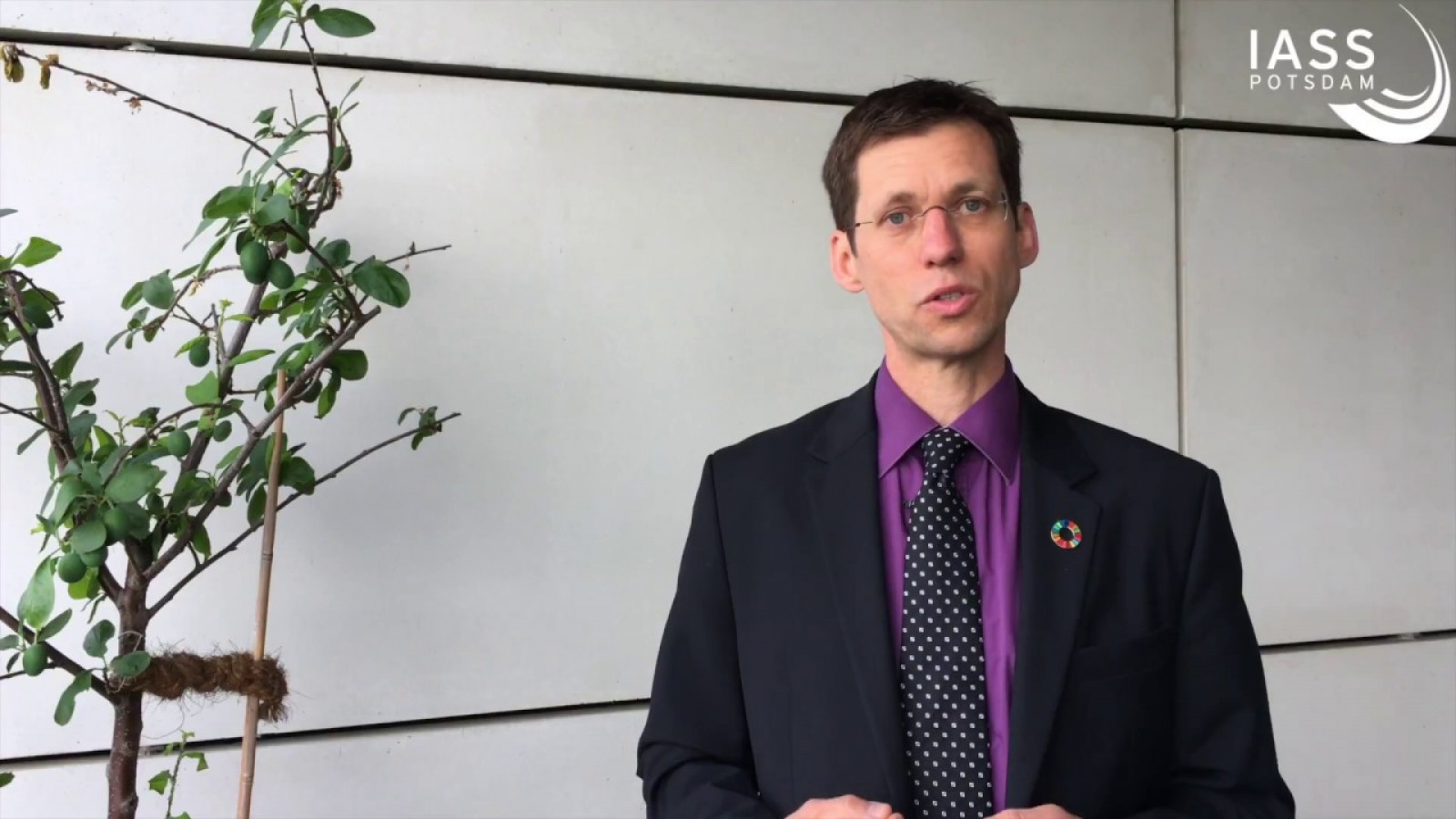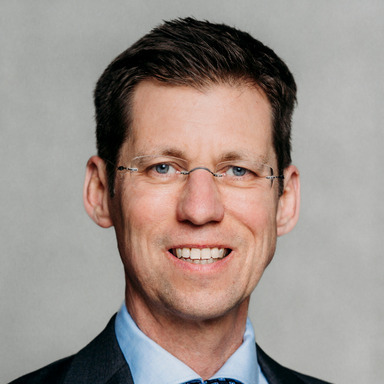
Prof. Dr. Mark Lawrence
Wissenschaftlicher Direktor
Telefon
Prof. Dr. Mark Lawrence ist Wissenschaftlicher Direktor am RIFS und befasst sich mit den zentralen Herausforderungen des Anthropozäns. In seinem Team verbindet und wendet er eine große Vielfalt wissenschaftlicher Expertise an, einschließlich seiner eigenen in Atmosphärenwissenschaften. Über diese interdisziplinäre Grundlage hinaus bezieht er auch gesellschaftliche Akteure in einen transdisziplinären Forschungsansatz ein.
Zu seinen zentralen transformativen Forschungsthemen gehören Luftverschmutzung, Klimawandel, Climate Engineering, umweltbezogene Governance in stark gefährdeten Regionen wie dem Himalaya, der Arktis und den Ozeanen sowie die auf Nachhaltigkeit ausgerichteten Schnittstellen zwischen den Wissenschaften und anderen wichtigen Wissensgemeinschaften wie den Künsten, Religionen und indigenen Völkern.
Zudem setzt er sich aktiv für eine ganzheitliche Entwicklung des Menschen als wichtigen Baustein der Nachhaltigkeit ein. Dazu gehört auch die Erforschung der Gemeinsamkeiten zwischen persönlicher und systemischer Transformation und der Denkweisen, die notwendig sind, um diese Transformationen miteinander in Harmonie zu bringen.
Prof. Dr. Lawrence promovierte 1996 am Georgia Institute for Technology. Von 2000 bis 2011 leitete er verschiedene Forschungsgruppen am Max Planck Institut für Chemie in Mainz. In den Jahren 2009 und 2010 lehrte er als Vertretungsprofessor für Meteorologie an der Universität Mainz, bevor er im Jahr 2011 zum Direktor des IASS ernannt wurde. Im Jahr 2014 erhielt er eine Honorarprofessur an der Universität Potsdam.
Prof. Dr. Lawrence ist Autor bzw. Ko-Autor von mehr als 190 begutachteten Veröffentlichungen mit einem h-Index von über 79 bei Google Scholar und über 64 bei Scopus. Er leitete mehrere internationale Projekte und war bzw. ist Mitglied verschiedener Beiräte diverser Fachzeitschriften sowie nationaler und internationaler Gremien, wie zum Beispiel von 2015 bis 2018 als Ko-Vorsitzender des International Global Atmospheric Chemistry Programms (IGAC) und aktuell als Co-Vorsitzender der Wissenschaftsplattform Nachhaltigkeit 2030 (wpn2030), sowie Mitglied im Rat für Nachhaltige Entwicklung (RNE), im Lenkungsausschuss des Sustainable Development Solutions Network (SDSN) Germany und im Vorstand des Deutschen Klima Konsortiums (DKK).
Gruppen
Blog Posts
Ausbildung:
- 1996 Promotion in Erd- und Atmosphärenwissenschaften, Georgia Institute of Technology
- 1993 Master of Science in Erd- und Atmosphärenwissenschaften, Georgia Institute of Technology
- 1991 Bachelor of Science in Physik, Georgia Institute of Technology Beruflicher Werdegang:
- 2011 - heute Wissenschaftlicher Direktor Forschungsinstitut für Nachhaltigkeit (RIFS), Potsdam
- 2013 - heute Honorarprofessor, Institut für Umweltwissenschaften und Geografie, Universität Potsdam
- 2011 - 2018 Geschäftsführender wissenschaftlicher Direktor Institute for Advanced Sustainability Studies, Potsdam
- 2009 - 2010 Vertretungsprofessor für Meteorologie Institut für Physik der Atmosphäre, Universität Mainz (beurlaubt vom Max Planck Institut für Chemie)
- 2006 - 2011 Gruppenleiter Max Planck Institut für Chemie, Mainz
- 2000 - 2005 Nachwuchsgruppenleiter Max Planck Institut für Chemie, Mainz
- 1996 - 2000 Postdoktorand Max Planck Institut für Chemie, Mainz
Download der Vita:
- Transdisziplinäre Forschung, Beteiligungs- und Kommunikationsprozesse
- Atmosphärenwissenschaften, insbesondere Mitigation der Auswirkungen von kurzlebigen, klimabeeinflussenden Schadstoffen (short-lived, climate-forcing pollutants, SLCPs)
- Mögliche Auswirkungen, Ungewissheiten und Risiken von Climate Engieering
- Nachhaltigkeitstransformation, persönliche und systemische Transformation
Publikationen am RIFS
Publikationen vor der Tätigkeit am RIFS
- Lawrence, M. G., and J. Lelieveld, Atmospheric pollutant outflow from southern Asia: A review, Atmos. Chem. Phys., 10, 11017-11096, 2010.
- Burrows, S. M., W. Elbert, M. G. Lawrence, and U. Pöschl, Bacteria in the global atmosphere: Part I - Review and synthesis of literature data for different ecosystems, Atmos. Chem. Phys., 9, 9263-9280, 2009.
- Burrows, S. M., T. Butler, P. Jöckel, H. Tost, A. Kerkweg, U. Pöschl, and M. G. Lawrence, Bacteria in the global atmosphere: Part II - Modelling of emissions and transport between different ecosystems, Atmos. Chem. Phys., 9, 9281-9297, 2009.
- Butler, T. M., and M. G. Lawrence, The influence of megacities on global atmospheric chemistry: a modelling study, Env. Chem., 6, 219-225, doi:10.1071/EN08110, 2009.
- Lawrence, M. G., and M. Salzmann, On interpreting studies of the effects of tracer transport by deep cumulus convection on atmospheric chemistry, Atmos. Chem. Phys., 8, 6037-6050, 2008.
- Butler, T. M., M. G. Lawrence, B. Gurjar, J. van Aardenne, M. Schultz , J. Lelieveld, The representation of emissions from megacities in global emissions inventories, Atmos. Env., 42, 703-719, DOI: 10.1016/j.atmosenv.2007.09.060, 2008.
- Lelieveld, J., T. M. Butler, J. Crowley, T. Dillon, H. Fischer, L. Ganzeveld, H. Harder, D. Kubistin, M.G. Lawrence, M. Martinez, D. Taraborrelli, and J. Williams, Atmospheric oxidation capacity sustained by a tropical forest, Nature, 452, 737-740, 2008.
- Rayfuse, R., M. G. Lawrence and K. M. Gjerde, Ocean Fertilisation and Climate Change: The need to regulate emerging high seas uses, Int. J. Marine and Coastal Law, 23, 297-326, 2008.
- Lawrence, M. G., T. M. Butler, J. Steinkamp, B. R. Gurjar, and J. Lelieveld, Regional pollution potentials of megacities and other major population centers, Atmos. Chem. Phys., 7, 3969-3987, 2007.
- Lawrence, M. G., The geoengineering dilemma: to speak or not to speak? Clim. Change, 77, 245-248, DOI: 10.1007/s10584-006-9131-5, 2006.
- von Kuhlmann, R., and M. G. Lawrence, The impact of ice uptake of nitric acid on atmospheric chemistry, Atmos. Chem. Phys., 6, 225-235, 2006.
- Lawrence, M. G., The relationship between relative humidity and the dew point temperature in moist air: A simple conversion and applications, Bull. Am. Meteorol. Soc., 86, 225-233, 2005.
- Lawrence, M. G., and P. J. Rasch, Tracer transport in deep convective updrafts: plume ensemble versus bulk formulations, J. Atmos. Sci., 62, 2880-2894, 2005.
- Lawrence, M.G., Ø. Hov, M. Beekmann, J. Brandt, H. Elbern, H. Eskes, H. Feichter, and M. Takigawa, The chemical weather, Environ. Chem., 2, 6-8, 2005.
- von Kuhlmann, R., M. G. Lawrence, U. Pöschl, and P. J. Crutzen, Sensitivities in global scale modeling of isoprene, Atmos. Chem. Phys., 4, 1-17, 2004.
- Kunhikrishnan, T. and M. G. Lawrence, Sensitivity of NOx over the Indian Ocean to emissions from the surrounding continents: nonlinearities in atmsopheric chemistry responses, Geophys. Res. Lett., 31, doi: 10.1029/2004GL020210, 2004.
- Lawrence, M. G., P. J. Rasch, R. von Kuhlmann, J. Williams, H. Fischer, M. de Reus, J. Lelieveld, P. J. Crutzen, M. Schultz, P. Stier, H. Huntrieser, J. Heland, A. Stohl, C. Forster, H. Elbern, H. Jakobs, and R. R. Dickerson, Global chemical weather forecasts for field campaign planning: predictions and observations of large-scale features during MINOS, CONTRACE, and INDOEX, Atmos. Chem. Phys., 3, 267-289, 2003a.
- Lawrence, M. G., R. von Kuhlmann, M. Salzmann, and P. J. Rasch, The balance of effects of deep convective mixing on tropospheric ozone, Geophys. Res. Lett., 30, 1940, doi:10.1029/2003GL017644, 2003b.
- Lelieveld, J., H. Berresheim, S. Borrmann, P. J. Crutzen, F. J. Dentener, H. Fischer, J. Feichter, P. J. Flatau, J. Heland, R. Holzinger, R. Korrmann, M. G. Lawrence, Z. Levin, K. M. Markowicz, N. Mihalopoulos, A. Minikin, V. Ramanathan, M. de Reus, G. J. Roelofs, H. A. Scheeren, J. Sciare, H. Schlager, M. Schultz, P. Siegmund, B. Steil, E. G. Stephanou, P. Stier, M. Traub, C. Warneke, J. Williams, and H. Ziereis, Global air pollution crossroads over the Mediterranean, Science, 298, 794-799, 2002.
- Lawrence, M. G., Side effects of oceanic iron fertilization, Science, 297, 1993, 2002.
- Lawrence, M. G., Evaluating trace gas sampling strategies with assistance from a global 3D photochemical model: Case studies for CEPEX and NARE O3 profiles, Tellus, 53B, 22-39, 2001.
- Lawrence, M. G., P. J. Jöckel, and R. von Kuhlmann, What does the global mean OH concentration tell us? Atmos. Chem. Phys., 1, 37-49, 2001.
- Lal, S. and M. G. Lawrence, Elevated mixing ratios of surface ozone over the Arabian Sea, Geophys. Res. Lett., 28, 1487-1490, 2001.
- Lelieveld, J., P. J. Crutzen, V. Ramathan, M. O. Andreae, C. A. M. Brenninkmeijer, T. Campos, G. R. Cass, R. R. Dickerson, H. Fischer, J. A. de Gouw, A. Hansel, A. Jefferson, D. Kley, A. T. J. de Laat, S. Lal, M. G. Lawrence, J. M. Lobert, O. L. Mayol-Bracero, A. P. Mitra, T. Novakov, S. J. Oltmans, K. A. Prather, T. Reiner, H. Rodhe, H. A. Scheeren, D. Sikka and J. Williams, The Indian Ocean Experiment: Widespread Air Pollution from South and Southeast Asia, Science, 291, 1031-1036, 2001.
- Crutzen, P. J. and M. G. Lawrence, The impact of precipitation scavenging on the transport of trace gases: A 3-dimensional model sensitivity study, J. Atmos. Chem., 37, 81-112, 2000.
- Lawrence, M. G., P. J. Crutzen, P. J. Rasch, B. E. Eaton and N. M. Mahowald, A model for studies of tropospheric photochemistry: Description, Global Distributions, and Evaluation, J. Geophys. Res., 104, 26245-26277, 1999a.
- Lawrence, M. G., and P. J. Crutzen, Influence of NOx emissions from ships on tropospheric photochemistry and climate, Nature, 402, 167-170, 1999.
- Lawrence, M. G., and P. J. Crutzen, The impact of cloud particle gravitational settling on soluble trace gas distributions, Tellus, 50b, 263-289, 1998.
- Lawrence, M. G., W. L. Chameides, P. S. Kasibhatla, H. Levy, II and W. Moxim, Lightning and atmospheric chemistry: the rate of atmospheric NO production, 189-202, in Handbook of Atmospheric Electrodynamics, Vol. I, ed. Hans Volland, CRC Press, Inc., Boca Raton, 1995.
- Lawrence, M. G., An empirical analysis of the strength of the phytoplankton-dimethylsulfide-cloud-climate feedback cycle, J. Geophys. Res., 98, 20663-20673, 1993.
- 20.02.2025: "Science-Policy Interface: Challenges and Opportunities" at Sustainability Science Summit 2025, German Committee Future Earth (DKN), Umweltforum
- 20.02.2025: "Why Is Climate Mitigation and Adaptation So Slow? Perspectives From the Social Sciences, the Humanities, etc." at Sustainability Science Summit 2025, German Committee Future Earth (DKN), Umweltforum
- 19.02.2025: "Wie verbessern wir die Interaktion und Zusammenarbeit mit Entscheidungsträger*innen?" at Fachtagung des Deutschen Klima-Konsortiums, Zentrum für Klimaresilienz, Universität Augsburg
- 21.11.2024: "Green Skills for the Future: Unlocking Investment for the Global Just Transition" at COP 29, Blue Zone
- 20.11.2024: "Voices from the Frontlines: How Lived Experiences Inform Bold Decision-Making for Resilience and Climate Justice" at COP 29, Nordic pavilion
- 19.11.2024: "Methane Matters: How to Apply the Climate Impact Brake" at COP 29, German Climate Pavilion
- 18.11.2024: "Climate Wisdom from COP29 - The Power of Positive Action" at COP29 Live Studio Brahma Kumaris
- 04.11.2024: "Purpose-driven process design: a practice-oriented framework for transdisciplinary events" at ITD Conference, Global Alliance for Inter- and Transdisciplinarity, Utrecht University, Railway Museum
- 08.10.2024: "The path to net zero: How do we ensure fair climate protection and planetary prosperity?" at 23rd Annual Conference of the RNE, AXICA Berlin
- 25.09.2024: "Ist es Zeit für ein Anthropozän 2.0?" at Raum-Zeitenwende des Anthropozäns. Welchen Wert hat die Vergangenheit angesichts von Klimawandel und Biodiversitätsverlust?, Annual conference 2024 of the Leibniz Research Alliance "Value of the Past", Museum König
- 16.09.2024: "Dinner Talk on "Is it Time for an Anthropocene 2.0?"" at Potsdam Summer School, RIFS, Potsdam
- 11.09.2024: "Panel Discussion at AMA Convergence 2024 "Societal Transformation as a spiritual practice"" at AMA Convergence 2024 "Societal Transformation as a spiritual practice"
- 28.08.2024: "Bridges over troubled water! How can we live happily, sustainably and connected with each other?" at bUm Raum für ein solidarisches Miteinander
- 15.05.2024: ""Nachhaltigkeit in der Forschung: Was kann Transdisziplinarität anbieten?"" at Prisma-Trialog zum Thema „Nachhaltigkeit in der Forschung an Großgeräten: Ressourceneffizienz und Zukunftssicherung", Referat 711 „Universum und Materie" des BMBF, online
- 25.04.2024: "Moderation der Ergebnisse, Diskussion und Empfehlungen: Workshop "1,5 Grad - Wie kommunzieren, wenn Ziele außer Reichweite geraten?", Jahrestagung und Mitgliederversammlung des Deutschen Klima Konsortiums" at DKK Jahrestagung und Mitgliederversammlung 2024
- 11.03.2024: "Black Carbon in the Kathmandu Valley" at Invited Seminar, Indian Institute of Science Education and Research, Mohali, India
- 30.11.2023: "Opening: Future Governance of Ocean-Based Negative Emissions Technologies - A Scenario Workshop" at Research Institute for Sustainability - Helmholtz Centre Potsdam (RIFS) Kleist Villa, Ball Room
- 23.11.2023: "EU Clean Air Forum 2023 - Linking clean air, climate and social inequality" at EU Clean Air Forum
- 22.11.2023: "DenkReise - "Wie politisch darf Wissenschaft sein?"" at WS22/23: Wohin wollen wir leben?, Universität Bonn, Center for Life Ethics/Haus für junges Denken
- 07.11.2023: "Carbon Footprint Policy Accelerator: Learning about Buy Clean and Whole Life Carbon Regulatory Standards for Buildings" at RIFS Potsdam, Berliner Strasse 130, 14467 Potsdam, Germany
- 07.11.2023: "Ehren-Veranstaltung zum 85. Geburtstag von Prof. Dr. Klaus Töpfer" at Ehren-Veranstaltung zum 85. Geburtstag von Prof. Dr. Klaus Töpfer, Akademie der Konrad-Adenauer-Stiftung, Tiergartenstr. 35, 10785 Berlin
- 24.10.2023: "Opening: Horizon Europe Project SOS-SZEROPOL2030 General Assembly" at Location Research Institute for Sustainability - Helmholtz Centre Potsdam (RIFS) Kleist Villa, Ball Room
- 05.10.2023: "Grün serviert - Klimafragen einfach vermittelt & beantwortet" at Biosphäre Potsdam, Orangerie
- 28.09.2023: "Scene-setting: CO2 budgets, the Paris Agreement and the challenges that CDR faces" at Kickoff Workshop Syncom Project "Scaling up CDR" (Berlin)
- 15.09.2023: "Globaler Klimastreik 15. September 2023 in Mainz" at Fridays for Future Mainz
- 16.06.2023: "How Political May Science Be?" at The International Centre for Integrated Mountain Development, Nepal, Seminar
- 30.05.2023: "How Political May Science Be?" at AWI PhD Days 2023, Telegrafenberg campus
- 06.12.2022: "How can communication between science, politics and economy contribute to a successful knowledge transfer?" at The Franco-German Make Our Planet Great Again Research Program (MOPGA), conference
- 23.11.2022: "Transformative Nachhaltigkeitsforschung" at Future Sustainability Week 2022, Tagesspiegel, Berlin
- 12.10.2022: "Wie politisch darf Wissenschaft sein?" at FORTRAMA Jahrestagung, Potsdam-Griebnitzsee
- 05.10.2022: "Reduction of short-lived climate pollutants - An important lever for climate protection and co-benefits for clean air" at Symposium Clean Air 2.0 - How to adapt WHO air quality standards
- 01.08.2022: "Eröffnungsvortrag: Die Treiber der Klimakrise" at KLIMAkademie (JHU Mainz)
- 26.06.2022: "Opening Session: Climate Engineering in Context" at Gordon Research Conference (GRC): "Climate Engineering: Processes and Impacts of Radiation Management Approaches to Climate Change"
- 04.04.2022: "ROUNDTABLE: THE ANTHROPOCENE MINDSET" at Roundtable Serie "Principles of Earth System Law", IASS
- 31.03.2022: "Begrüßungsansprache zur Jahrestagung und Mitgliederversammlung des Deutschen Klima Konsortiums" at Klimaschutz und Freiheit - Wie passt das zusammen? (DKK Jahrestagung und Mitgliederversammlung)
- 10.12.2021: "Ocean Governance Research at IASS" at Vorstellung IASS am GFZ,
- 16.11.2021: "Drivers of Climate Change" at Lecture series "Introduction to CLEWS", Universität Potsdam
- 25.05.2021: "Short Lived Climate Forcing Pollutants as a Game Changer: How they influence both Air Quality and Climate Change" at EU Green Week 2021 Workshop on European Zero Pollution Ambition
- 20.04.2021: "Treiber des Klimawandels und was dagegen unternommen wird" at Ringvorlesung zur Klimakrise, Universität Potsdam
- 10.02.2021: "Deutsche Nachhaltigkeitstrategie - Weiterentwicklung 2021" at Öffentliches Fachgespräch des PBNE, Videokonferenz Deutscher Bundestag
- 21.01.2021: "Klima Geoengineering: Mögliche Wirkungen, Nebenwirkungen und Risiken" at Ringvorlesung "Wissenschaft und Alternative Fakten"
- 2010/11 Landeslehrpreis Rheinland-Pfalz, Universität Mainz
- 2009/10 Lehrpreis in Physik, Mathematik und Informatik, Universität Mainz
- 2000-2005 Bundesministerium für Bildung und Forschung (BMBF) AFO2000 Programm, Fördergelder für eine Nachwuchsforschungsgruppe für "Southern Asian Photochemistry and Impacts of the Redistribution of Emissions", SAPHIRE (Nachwuchsgruppenleiter)
- 1992-1995 Graduate Fellowship, US National Science Foundation
- 1991-1995 President's Fellowship, Georgia Institute of Technology
- 1987-1991 President's Scholarship, Georgia Institute of Technology
- Mitglied des Rat für Nachhaltige Entwicklung (seit 2023)
- Deutsches Klima-Konsortium (DKK), Mitglied der Generalversammlung (seit 2018) und Mitglied des Vorstands (seit 2021)
- REACH (Resilience to Environmental Change and Emerging Health Threats), Mitglied des International Advisory Panel (seit 2021)
- Bürgerrat Klimaschutz, Mitglied des wissenschaftlichen Kuratoriums (2020 – 2021)
- Wissenschaftsplattform Nachhaltigkeit 2030 (wpn2030), Co-Vorsitzender (seit 2020)
- Leibniz-Institut für Troposphärenforschung (TROPOS), Mitglied des wissenschaftlichen Beirats (seit 2020)
- Berater der Planungsgruppe für die Universität Nepal (seit 2019)
- Wissenschaftlicher Berater für die Interfaith Liaison Committee to the UNFCCC
- Mitglied des erweiterten Klimarats der Stadt Potsdam (2018 – 2019)
- Sustainable Development Solutions Network Deutschland (SDSN Germany), Mitglied des Lenkungsausschuss (seit 2016)
- Forum for Climate Engineering Assessment, Mitglied des Beirats (seit 2016)
- Geoengineering Model Intercomparison Project (GeoMIP), Mitglied des Lenkungsausschuss (seit 2014)
- Geo.X (Forschungsnetzwerk für Geowissenschaften in Berlin und Potsdam), Mitglied des Kuratoriums (seit 2014)
- International Commission on Atmospheric Chemistry and Global Pollution (iCACGP), Mitglied (2002 – 2010 und seit 2014)
- Earth System Research Partnership (ESRP) der Max-Planck-Gesellschaft, assoziiertes Mitglied (seit 2013)
- ProWissen (Wissenschaftskommunikation und Aktionsnetzwerk), Mitglied des Kuratoriums (seit 2011)
- International Global Atmospheric Chemistry program (IGAC), Mitglied des wissenschaftlichen Lenkungsausschuss (2010 – 2018) und Co-Vorsitzender (2015 – 2018)
- UNEP/ABC (United Nations Environment Program / Atmospheric Brown Clouds project), Mitglied des Lenkungsausschuss (2006 – 2015)
- SCIAMACHY (Instrument auf dem EnviSat Satellit), Mitglied des Lenkungsausschuss (1999 – 2011)
- Mitglied des Beirats der Zeitschrift One Earth (seit 2018)
- Mitglied des Beirats der Zeitschrift Advanced Sustainability Systems (seit 2016)
- Vorstand und Gründungsmitglied Climanosco (seit 2015)
- Mitherausgeber der Zeitschrift Atmospheric Chemistry and Physics (2000 – 2008)
- Mitglied der Redaktion der Zeitschrift Atmospheric Environment (2001 – 2004)