A Global Strategy is Needed to Reduce Ozone Levels
29.01.2026
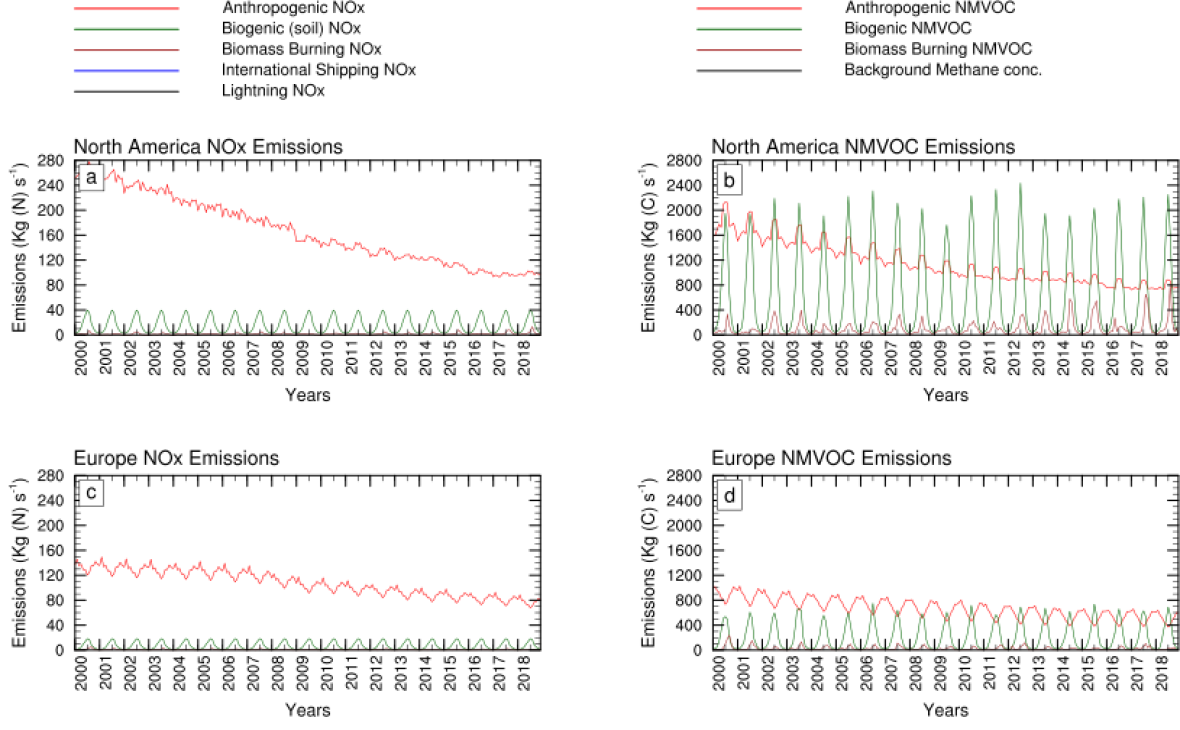
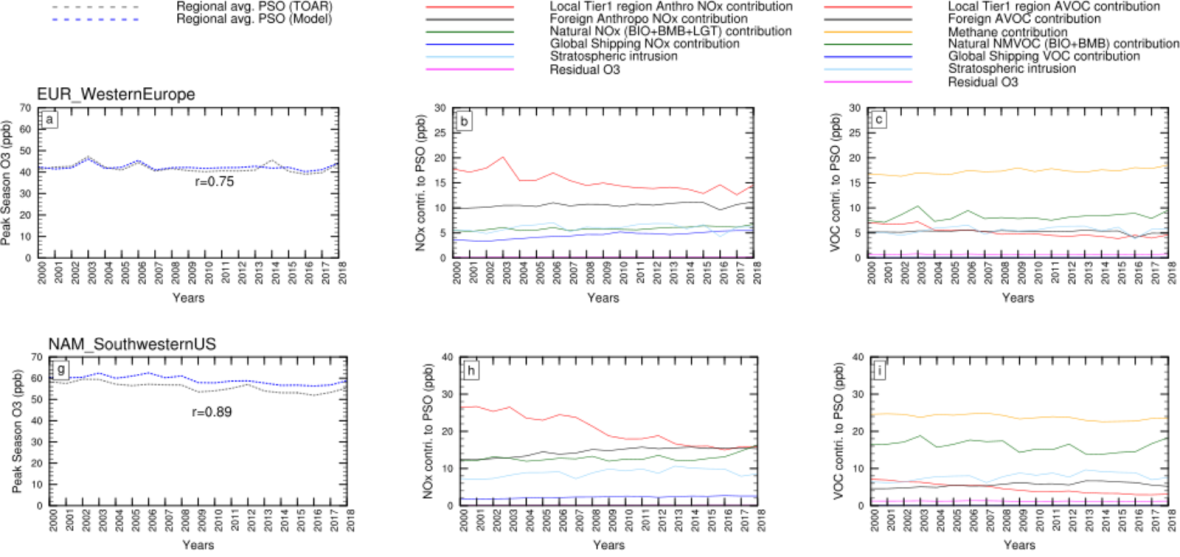
In North America and Europe, emissions of ozone precursors such as nitrogen oxides (NOx) and volatile organic compounds (VOCs) declined by half between 2000 and 2018, mainly as a result of strict air pollution control policies. However, the ozone content of the air – and thus the risk to human health – has not decreased proportionally. Until now, theories about the causes have been largely based on statistical conjecture. Scientists from the Research Institute for Sustainability (RIFS) at GFZ and collaborators have now provided more clarity on these changes by conducting global model simulations using a novel emissions tagging technique. Their study, published in Atmospheric Chemistry and Physics, shows that the weaker-than-expected decline of ozone in Europe and North America is mainly driven by increased transport of ozone produced abroad.
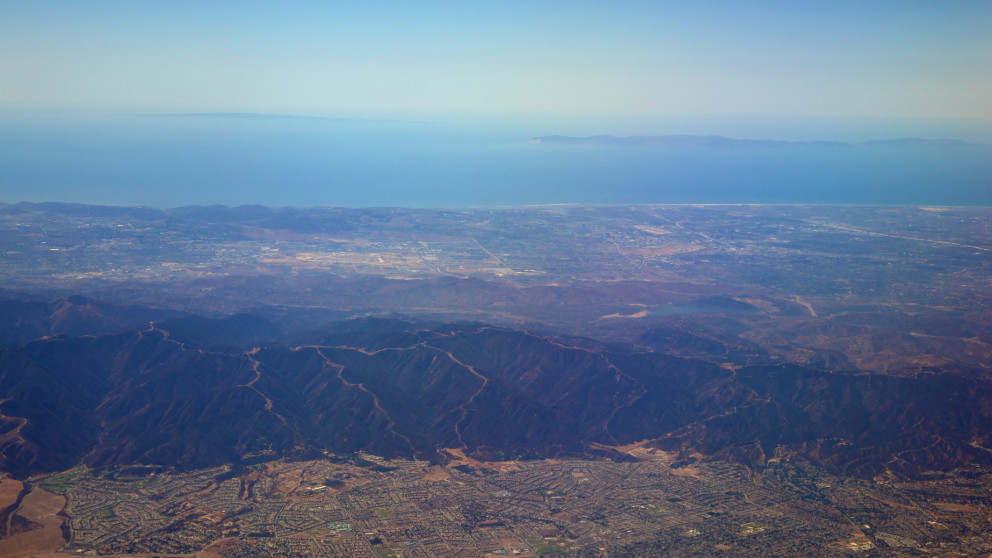
On the one hand, Europe and North America have been successful with their measures to improve local air quality: by implementing strict air quality guidelines and regulations, they have significantly reduced emissions of ozone precursors. These measures included setting stricter emission standards for vehicles and industrial processes, promoting clean technologies and utilising technological advances. As a result, ozone levels fall over the summer months. However, winter and spring levels have risen, so that the annual ozone exposure for the population did not change significantly.
"The observed seasonal and annual changes have been discussed in studies since the early 2000s. These refer to a variety of possible causes, for example increased intrusion of ozone from the stratosphere due to climate change and higher ozone imports from regions with rapidly rising emissions, particularly in East Asia. In addition, there is a reduced removal of ozone in winter due to decreases in local NOx emissions. It is important to understand that the same NOx which produces ozone in the presence of sunlight also removes it in the absence of sunlight. However, these explanations have largely remained within the realm of statistical conjecture," explains first author Tabish Ansari.
Simulations performed using an atmospheric chemistry transport model with a novel emissions tagging system developed at RIFS enabled the research team to model global ozone distributions and assign them to original emissions from various regions and sectors. The results demonstrate a clear offsetting of the gains from local emission controls by an increasing share of foreign-produced ozone. As a result, previous statistical assumptions about the role of increasing foreign contribution can now be considered a certainty. “The increase in NOx emissions from regions such as East Asia, especially China, and the increasing contribution of international shipping contribute significantly to the hemispheric and intercontinental transport of ozone," says Ansari.
Air pollutants from Asia reach Europe and America
According to the study, the increased influence of natural NOx emissions, for example from vegetation, forest fires and lightning, on ozone formation is also noteworthy. Natural NOx emissions have not increased significantly, but are currently producing more ozone. This is because the competition from NOx emissions from anthropogenic sources such as industry or vehicles has decreased. As less anthropogenic NOx is available to form ozone in North American and European air, natural NOx has become more active. This type of competition between molecules is a well-known phenomenon in atmospheric chemistry.
The authors emphasise that effective ozone mitigation requires international engagement and cooperation. The development of a trusting dialogue, based on reliable estimates of ozone transport between regions, is crucial for the implementation of effective measures. Regional measures alone are not sufficient to control pollutants such as ozone, which persist in the atmosphere long enough to travel intercontinentally.
Ansari, T., Nalam, A., Lupaşcu, A., Hinz, C., Grasse, S., & Butler, T. M. (2025). Explaining trends and changing seasonal cycles of surface ozone in North America and Europe over the 2000-2018 period: a global modelling study with NOx and VOC tagging. Atmospheric Chemistry and Physics, 25(22), 16833-16876. https://doi.org/10.5194/acp-25-16833-2025
Contact